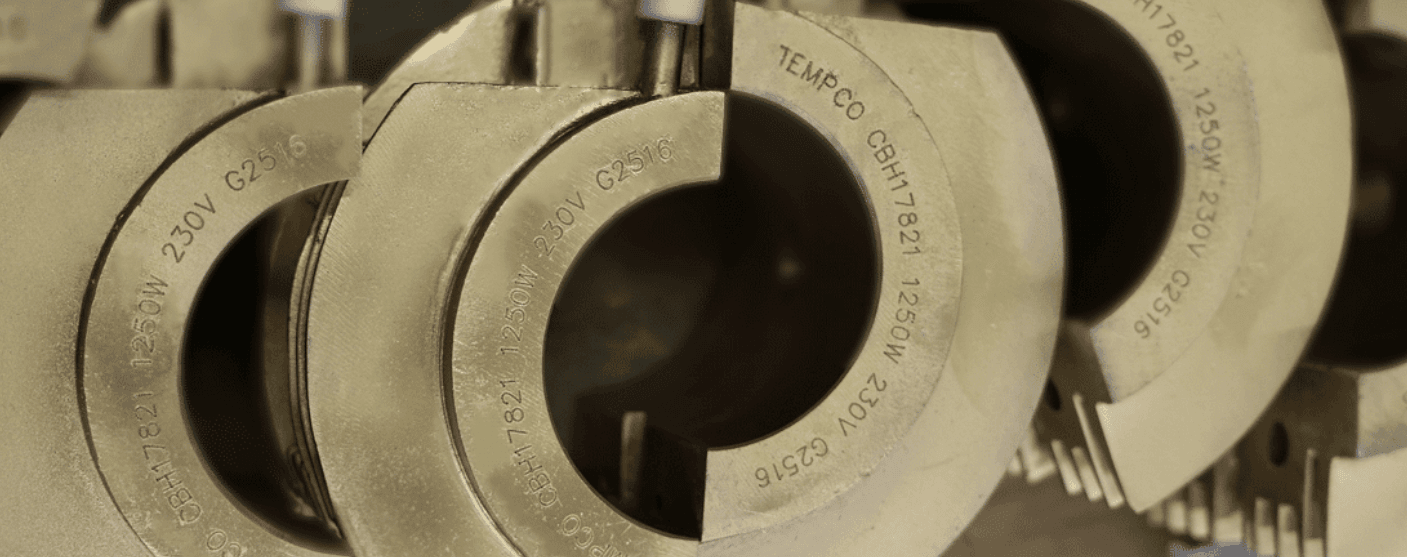


Cast-in thermal components are used across a wide range of industries thanks to their reliability, stability and design flexibility. Tempco is a leading manufacturer in this field, supplying high-quality solutions for a variety of applications. Rotero translates this technology into practical solutions and helps determine whether cast-in heating is suitable for your design. In this blog, we explain what cast-in components are, where they are used and when they offer real added value.
What are cast-in thermal components?
Cast-in thermal components are heating solutions in which the heating element is completely cast into metal. This creates a single, robust, heat-conductive component capable of providing highly consistent heating. But what exactly does the manufacturing process for a cast-in component involve?
Step 1: Select a suitable heating element
The process begins by selecting a heating coil or cartridge heater. This is the component that will ultimately generate the heat.
Step 2: Position the element in a mould
The heating element is positioned accurately inside a mould that determines the final shape of the component. This may be a plate, ring, cylinder or a more complex geometry, whatever the final application requires.
Step 3: Cast the metal around the element
Molten aluminium or bronze is poured into the mould, completely surrounding the heating element. The metal forms a solid protective layer around it.
Step 4: Create one solid component
Once cooled, the result is a robust and durable component. The cast-in element provides excellent heat transfer and a long service life, even under demanding operating conditions.
Why and where are cast-in components used?
Cast-in components are selected for applications that require high reliability, stable performance and precise temperature control. Because the heating element is securely embedded in the metal, it is protected against vibration, moisture and mechanical loads. This makes cast-in technology suitable for a wide range of industries, including:
- Plastics processing: injection moulding and thermoforming applications where consistent temperatures are essential.
- Foodservice: heated holding pans, frying systems and toasters that need to heat up quickly, safely and evenly.
- Automotive: temperature control during the assembly of braking and drivetrain components.
- Aerospace: vacuum test systems for precise thermal validation.
- Water treatment: frost protection for motors and aerators in outdoor installations.
Is your intended application not listed above? We would be happy to help determine whether cast-in thermal components are suitable for your application.
When are cast-in components suitable for your application?
Cast-in components are particularly useful when standard heaters cannot provide the required performance or stability. These are the main situations in which they offer advantages:
Reliability in critical processes
Cast-in components provide highly predictable performance under continuous loads or in 24/7 production environments. Because the heating element is cast into the component, the risk of loose connections or mechanical damage is reduced. This helps keep your process running without unplanned downtime.
Precise and even temperature control
Because the element is completely surrounded by metal, heat is distributed uniformly without hotspots. This is essential in applications where even small temperature fluctuations can directly affect tolerances, adhesion or material behaviour.
Space efficiency and customised engineering
Where installation space is limited or unusual geometries are required, cast-in technology offers considerable design freedom. The heater and structural component are combined into one compact part, with the correct shape, tolerances and mounting points for your application.
Solutions for demanding operating conditions
Cast-in components can withstand vibration, moisture, thermal shock and mechanical loads. This allows them to continue operating reliably even under demanding process conditions, for example in water treatment, automotive assembly or heavy-duty production lines.
Technical considerations for cast-in components
Material selection: aluminium or bronze
Cast-in components are usually manufactured from aluminium or bronze. Aluminium is lightweight, transfers heat quickly and provides an even temperature distribution. Bronze is stronger, more wear-resistant and better able to withstand chemical exposure. The right choice depends on the required heat transfer, mechanical load and expected service life.
Design and integration factors
Important design considerations include watt density, thermocouple positioning, heat-up time and the mounting method. The shape and thermal mass of the component also influence how heat is distributed. Taking these factors into account early in the design process helps create a solution that closely matches the requirements of the application.
Suitable for prototypes, small batches and large production runs
Cast-in components are available from quantities as low as a single unit. This makes them ideal for prototypes, test setups and small production runs where you want to quickly validate whether the shape, fit and heat output meet the design requirements.
Scaling up is equally straightforward. Cast-in technology is highly suitable for larger production volumes while maintaining consistent quality. This means the same proven solution can be developed from prototype through to series production without compromising performance or reliability.
When are cast-in components less suitable?
Cast-in heaters are less practical when the heating element needs to be replaced regularly or when extremely fast heat-up times are required. In these situations, cartridge heaters, mica heaters or band heaters are often a better alternative.
How Rotero helps you choose the right solution
Selecting the right cast-in thermal component requires an understanding of material selection, geometry and power requirements. Rotero can support you from the earliest stages of the design process and advise you on which heating technology is best suited to your application. Thanks to our partnership with Tempco, we can respond quickly and provide both standard and customised solutions tailored precisely to your machine or process.
We help you select a solution that is technically sound and delivers reliable performance. As part of this process, we always assess whether cast-in heating is the most efficient choice or whether another type of heater would be better suited to the required performance and maintenance needs.
Finding the best thermal solution together
Would you like to know whether cast-in thermal components are suitable for your application? We would be happy to discuss the possibilities with you. Contact us for advice or a tailored proposal.