

Many engineers are faced with a challenging problem: an outdated machine needs to be upgraded, but the engine inside it is no longer available. The first thought? “We’ll just copy the existing engine.” But as experts at PMW Dynamics and Rotero know: copying an engine is often more complex than designing a new one.
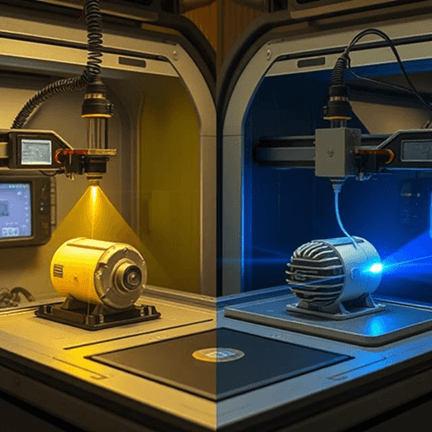
Why an exact copy?
In many cases, the existing engine is working perfectly and there is simply a need for replacement. Sometimes regulations and certifications play a role – a different engine may mean a time-consuming and expensive recertification process. In other cases, it is for visual or logistical reasons, for example to maintain a uniform inventory.
Whatever the reason, making an exact copy requires a careful approach.
The 5 steps to successful reproduction
1. Collecting data
The first challenge? Finding the original technical documentation. Often customers only have a working (or broken) engine and the original datasheet is missing. Sometimes all that remains is an old pencil sketch from the 80s. Where possible we collect data from the original manufacturer, but often we start from scratch.
2. Back to the drawing board
With the available information we analyze which aspects need to be exactly replicated. Modern materials and production techniques can sometimes even lead to better performance without changing dimensions. If the customer needs an absolute 1-to-1 copy, we disassemble the old engine (if possible) to map the internal structure and wiring.
3. New drawings and CAD models
Next, we create a digital model of the engine. Old designs are converted to modern production standards, such as the switch from inches to millimeters. We share these CAD models with the customer for validation, so we know for sure that the new engine fits perfectly.
4. Build and test
Once the designs are approved, we start production of a prototype. This is tested extensively—both in our lab and at the customer’s—to ensure that the performance is identical to the original.
5. Validation and serial production
After successful testing, we start production, whether it’s a single engine or hundreds of units. Thanks to a streamlined process, we guarantee a reliable, long-term solution for our customers.
Conclusion: Expertise is essential
Simply “copying and pasting” an engine often proves to be more complex than expected. Sometimes improvements are possible, but if an exact copy is required, PMW Dynamics, together with Rotero, offers the expertise to meet this challenge.
Do you have an outdated engine that needs replacing? Contact Rotero via the contact form on this site or call/mail us for customized drive technology advice!